
Rotating assets: the parts you swap, repair and reuse
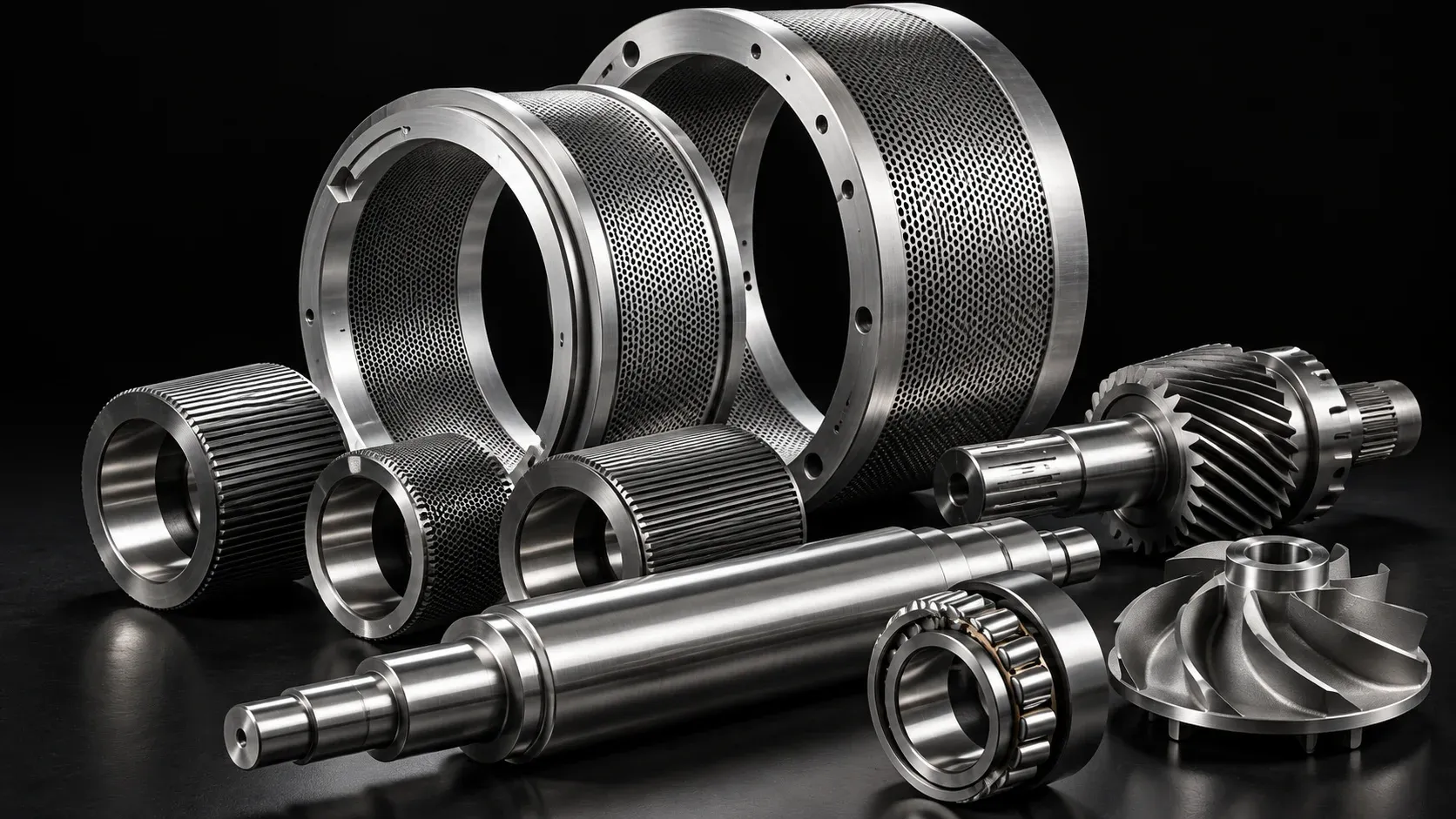
Most parts in a plant are used up or thrown away. A few are not. A pellet die in an animal feed mill wears down, comes off the press, is reworked in the workshop and goes back on, several times in its life. Maintenance software calls a part like this a rotating asset. To know how much life it has left, the record has to follow the die through every swap and every repair.
A rotating asset is a spare that comes back
A plant keeps three kinds of part, and only one of them returns from the machine.
| Consumable | Spare part | Rotating asset | |
|---|---|---|---|
| What happens to it | Used up in operation | Fitted once, thrown away when worn | Swapped out, repaired, fitted again |
| Examples | Lubricant, filters, welding rods | Most bearings, seals, fuses, belts | Pellet dies, rolls, molds, spare pumps and motors |
| What the record tracks | Quantity on the shelf | Quantity on the shelf | Each unit by name: where it runs, how much it has run, every repair |
A bearing leaves the shelf, goes into a machine and drops out of the record. A die stays the same die through every swap and every repair, so its record has to stay with it.
Rotating assets are in almost every plant
- Pellet mill dies and rollers, in animal feed, aquafeed, pet food, fertilizer, and wood and biomass pellet plants.
- Roller mill rolls, reground between runs, in flour mills, sugar mills and cement plants.
- Rolls in steel, aluminum and paper mills.
- Punches and dies on tablet presses, in pharmaceutical and supplement plants.
- Extrusion dies, stamping dies and molds, in food, plastics, automotive and tire plants.
- Pumps, motors and gearboxes kept as spares and swapped in when one fails.
Each one is expensive, wears with use, is repaired several times, and runs in more than one machine.
Take the pellet die in a feed mill. The Feed Pelleting Reference Guide puts it plainly: “The cost of a die is a major operating expense associated with the pelleting process.” Dies “can easily weigh hundreds of kilograms”, so a change is a planned job with a crew. The same guide asks for the record: “Keep accurate and complete records on all die specifications and tonnage to help evaluate die performance.”
How maintenance software handles rotating assets today
Enterprise systems track them. IBM Maximo calls them rotating assets, and SAP calls the repair cycle refurbishment of repairable spares. Both are built for large enterprises, and SAP’s maintenance module comes as part of its ERP rather than on its own. We think a plant is better served by software built for the work it does.
Mid-market CMMS tools usually leave it to a workaround. MaintainX is one example. Asked how to track cutting blades that rotate between two extruders, its Community Team suggested making each blade a sub-asset of an extruder and recording its state with custom statuses. Moving a blade then means editing its Parent Asset field on the asset record, away from the work order.
That record stays right only if someone remembers to update it:
- Nothing on the work order asks which part came off and which went on.
- The job closes either way, whether or not anyone edited the asset.
- A status set by hand is only as current as the last person who set it.
How our CMMS tracks a rotating asset
The steps below follow one die change on Koidra’s demo plant, which carries the records of a working wood pellet plant: die 61188083 comes off Pellet Mill 2, and spare die 61073642 goes on.
The part is an asset of its own. It has its own record and QR label, and knows the machine it is mounted in. A spare sits in the store or the workshop.
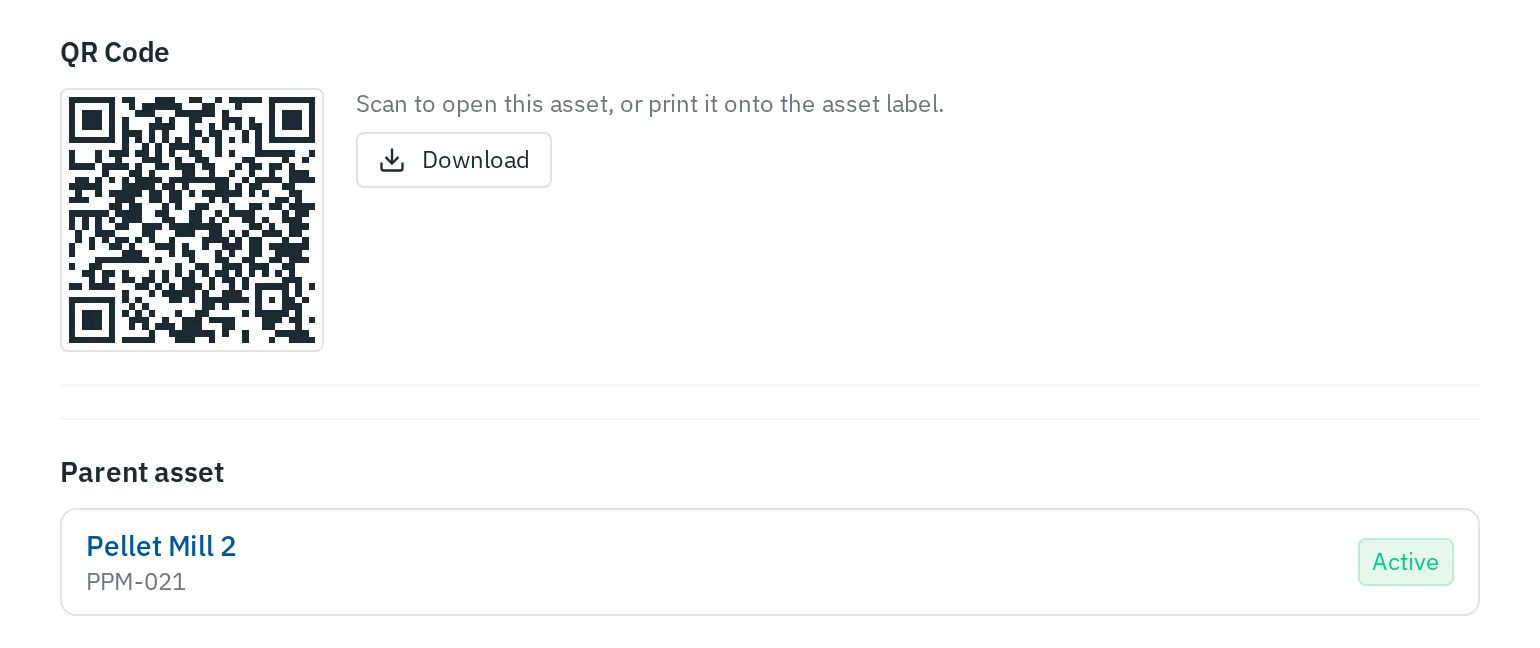
Die 61188083 knows the mill it runs in.
The work order cannot be completed until the swap is recorded. The procedure for a die change, a roll change or a pump swap asks for it, so the record is never left for later.
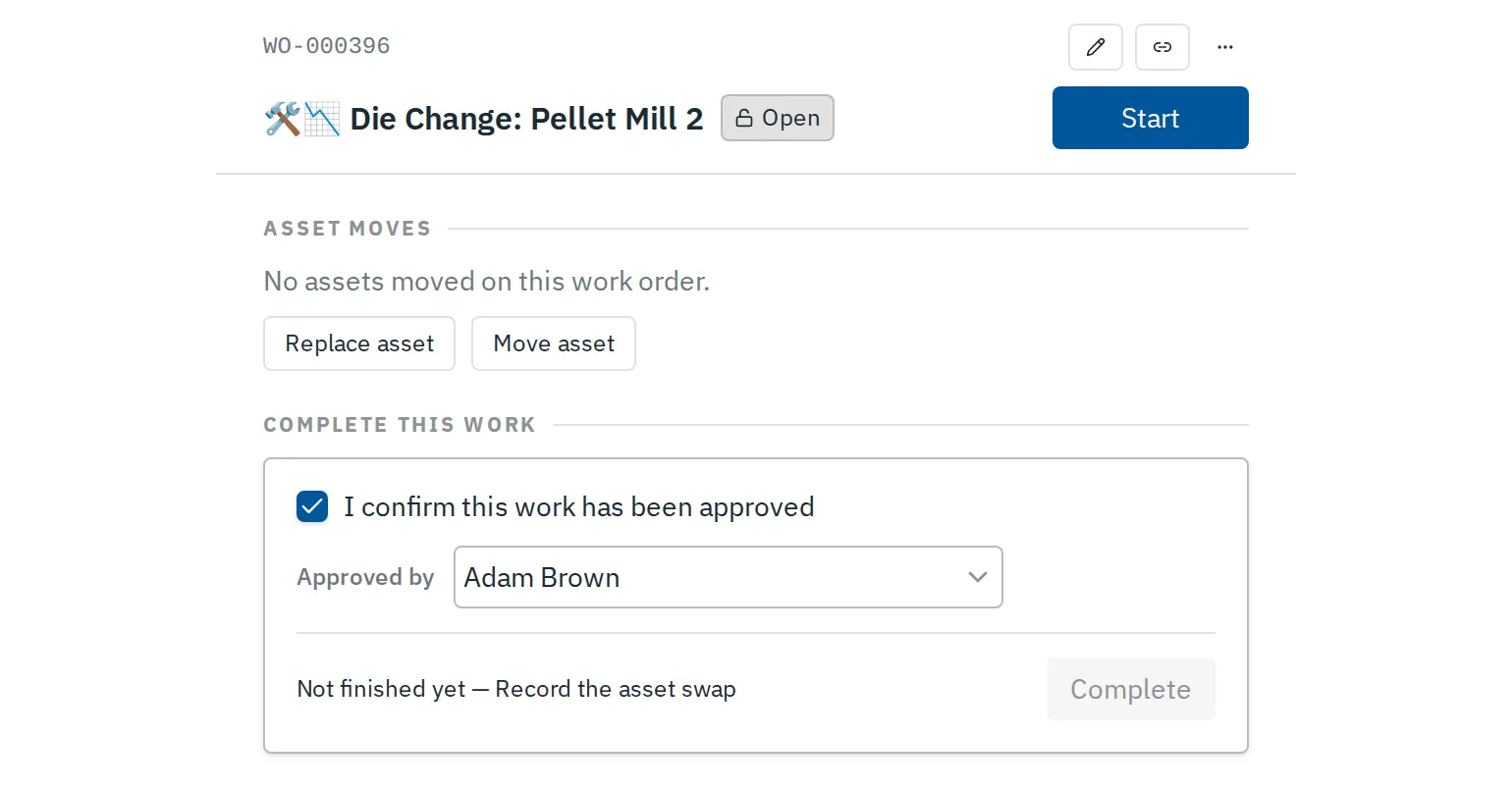
Complete stays greyed out until the swap is on the job.
The technician records the swap on the job. It says which part came off, which went on, and where the old one goes. Only the parts mounted in that machine are offered to take off, and only spares to put on.
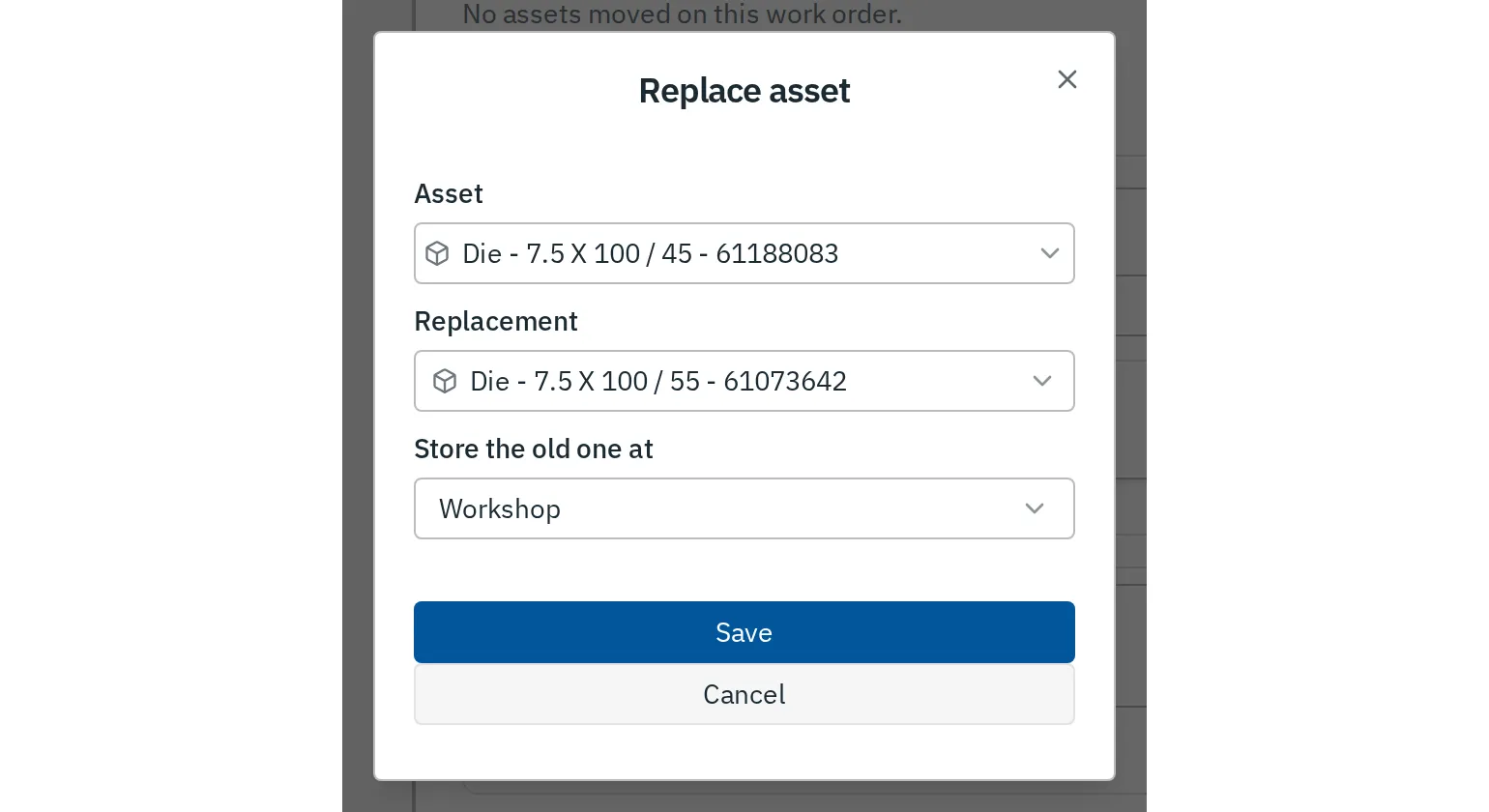
Die 61188083 comes off to the workshop; spare 61073642 goes on.
Every move stays on the job and in the part’s history. Each one shows who made it and when.
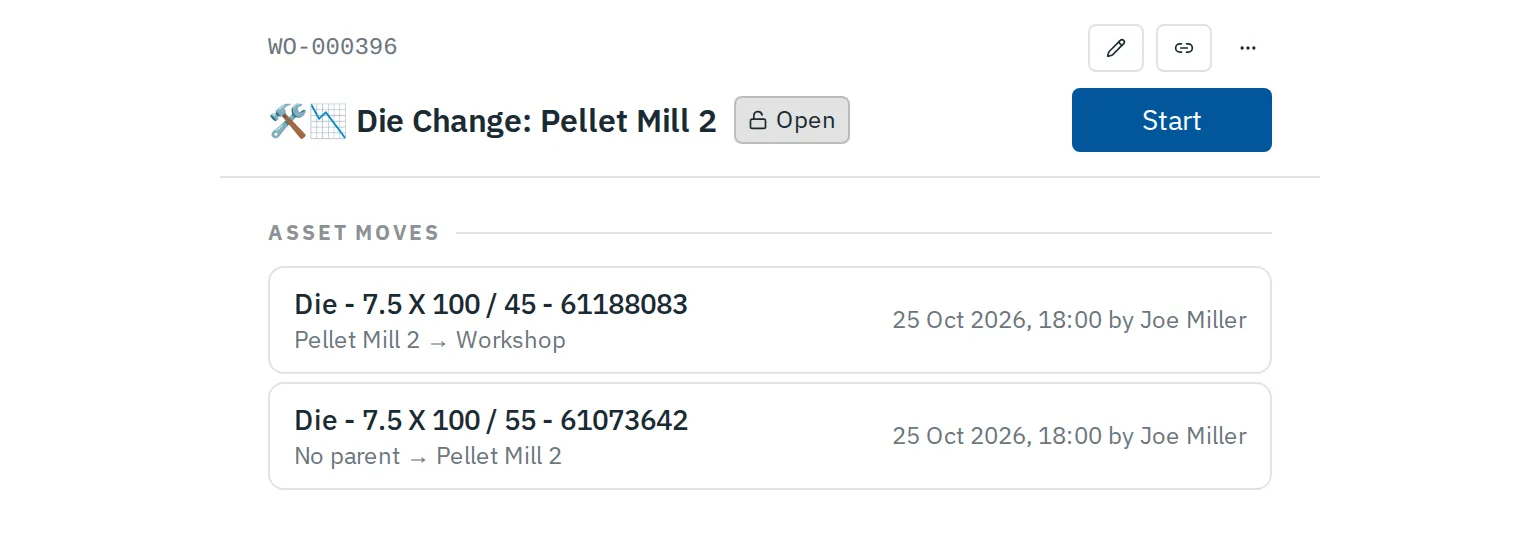
Both moves, timed and signed, on the work order.
The worn part gets a job of its own. “Repair or scrap” is filed at the workshop and linked to the job that took it off.
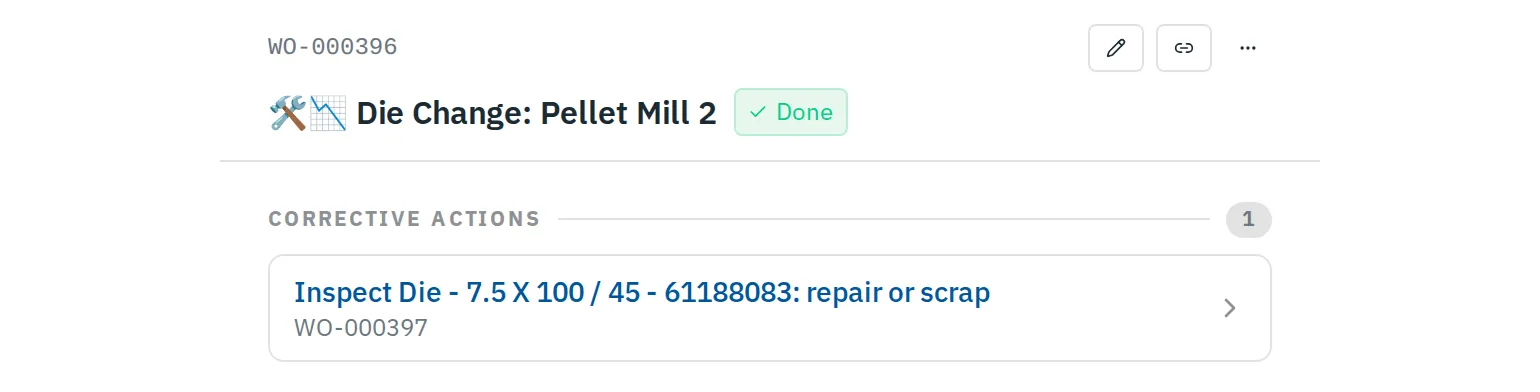
The die change is done, and die 61188083 waits for the workshop’s verdict.
What the record makes possible
A rotating asset is worth tracking because it comes back. Each time a die is swapped on a work order, its record gains a mill, a date and the job that moved it. Each time it goes to the workshop, it gains a repair. After a few months, every die has a history of its own.
That history answers a question every pellet plant pays for: which dies cost the most per ton, and why. The next post works through it with a year of one plant’s dies.
To see how rotating assets fit with work orders, preventive maintenance and spare parts, explore our CMMS.