
Step 2 of five
Maintenance Management
The system decides what maintenance is due, dispatches it, and tracks what it cost.
Tell us how you run maintenance today. Migrating an existing system, including its history, is something we have done before.
Replaces
- MaintainX
- Fiix
- UpKeep
- A whiteboard and somebody's memory
Pays for itself by
Displacing a maintenance-software subscription outright, and turning preventive maintenance from a memory into a schedule with parts and costs attached.
The number a buyer checks: Preventive maintenance completion rate, the licence it replaces, and parts carrying cost.
What sits in Maintenance Management
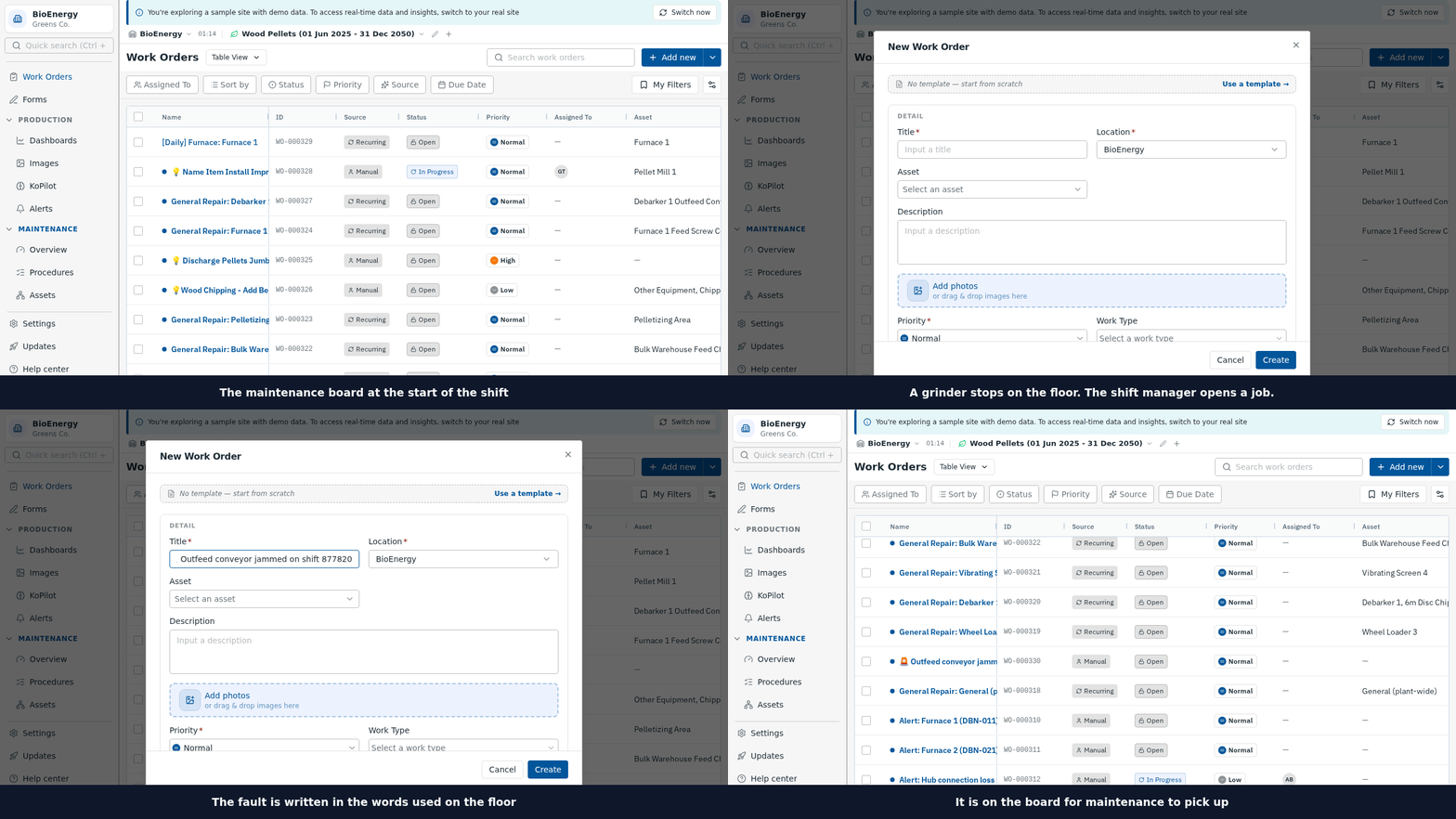
- Work orders with priority, assignment, checklists, and photo evidence on completion.
- Recurring preventive schedules, so a press die inspection happens because it is due rather than because someone remembered.
- An asset register with condition history, so a machine’s record follows it.
- Spare parts with real stock movement. Parts are consumed against a work order and the stock level moves. It is inventory rather than a list.
- Procedures with conditions, so a checklist can branch on what the technician finds.
- Cost per job, labour and parts, rolled up per asset and per period.
The part that only works because of Essentials
A threshold crossing can open a work order by itself. Against the right asset, with the right checklist, assigned to whoever is on shift. Nobody has to notice the trend first.
This is the smallest honest example of the system acting rather than reporting, and it is the reason the two lower steps are worth more together than apart. A maintenance system bought on its own can only ever tell you what people already decided to do.
It has survived a real plant
One customer moved their entire maintenance operation onto Koidra, including 8,200 existing work orders migrated from a competing system with their history and costs intact. Cost records still carry the original external identifiers so the two systems could be reconciled line by line during the cutover.
That matters more than a feature list. Maintenance software is judged on whether it survives contact with a plant that is already running.
Where this sits
Four steps to autonomous operations. Each one is a complete product with its own payback, and each makes the next possible. Read the full ladder.
-
STEP 1
Essentials
Every signal the plant produces, in one place, live and historical.
-
STEP 2
Maintenance Management
The system decides what maintenance is due, dispatches it, and tracks what it cost.
-
STEP 3
AI Advisory
Reports that arrive without being asked for, saying what changed and what to look at.
-
STEP 4
KoPilot
Closed-loop control of the process, minute by minute, with no human at the panel.
Next step: AI Advisory. Reports that arrive without being asked for, saying what changed and what to look at.
See Koidra on your own plant data
Bring a week of readings from one line. We will show you what the platform sees, what it would have flagged, and what it would have scheduled.
Book a demo